
Setting Up in Dubai: Free Zone vs Mainland, and What It Really Costs
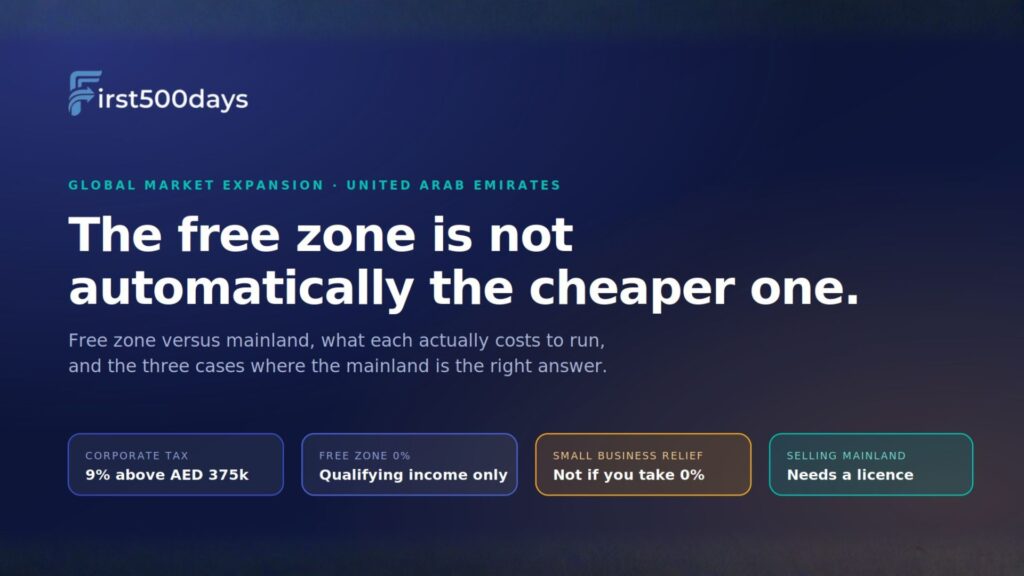
Almost every article on this subject tells you the free zone is cheaper and tax-free. For a lot of startups both halves of that sentence are wrong. Here is the decision as it actually works, with the rules quoted from the source. General information, not tax or legal advice Every rule and figure below is […]
India to UK: A Complete Market-Entry Playbook for Startups
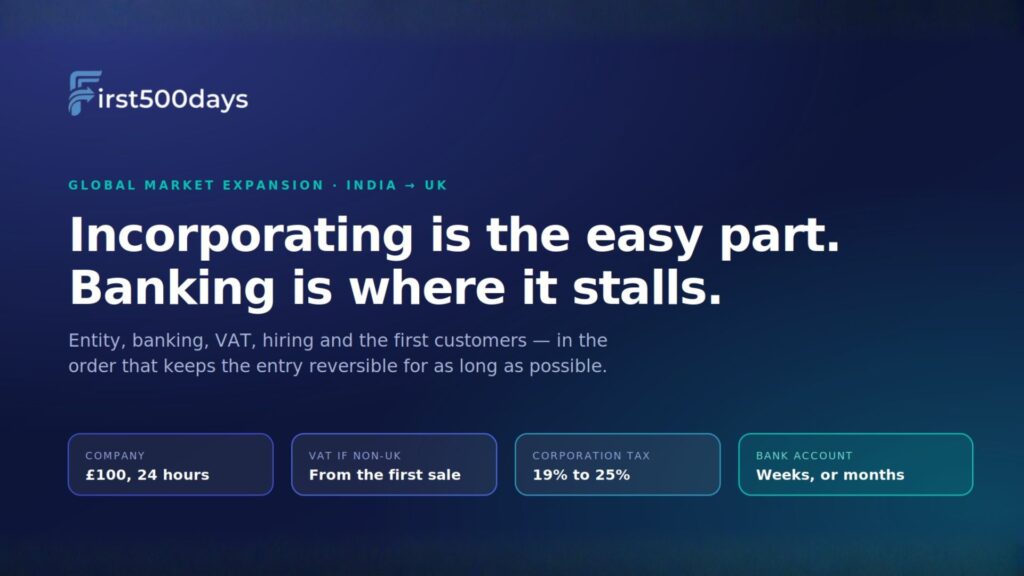
Registering a UK company takes a day and costs £100. Everything after that — banking, VAT, hiring, and actually finding customers — is where the corridor gets expensive. Here is the sequence that keeps it cheap for as long as possible. General information, not tax or legal advice Every figure below was checked against GOV.UK […]
Why International Expansion Fails — It’s Almost Never the Product

Companies enter new markets with products that work, teams that are competent and budgets that are adequate, and fail anyway. The causes are consistent, they are visible early, and almost all of them could have been caught for the cost of a few weeks and some uncomfortable conversations. International expansion fails on market selection, customer […]
How to Choose Which Country to Expand Into First

Most companies pick their first international market for reasons that would not survive being written down — the language, a conference, the size of the prize. Here is a weighted model that makes the decision on evidence, and a worked example where the biggest market comes last. Choose your first expansion market by scoring candidates […]
What a Venture Studio Actually Does — And When You Shouldn’t Use One
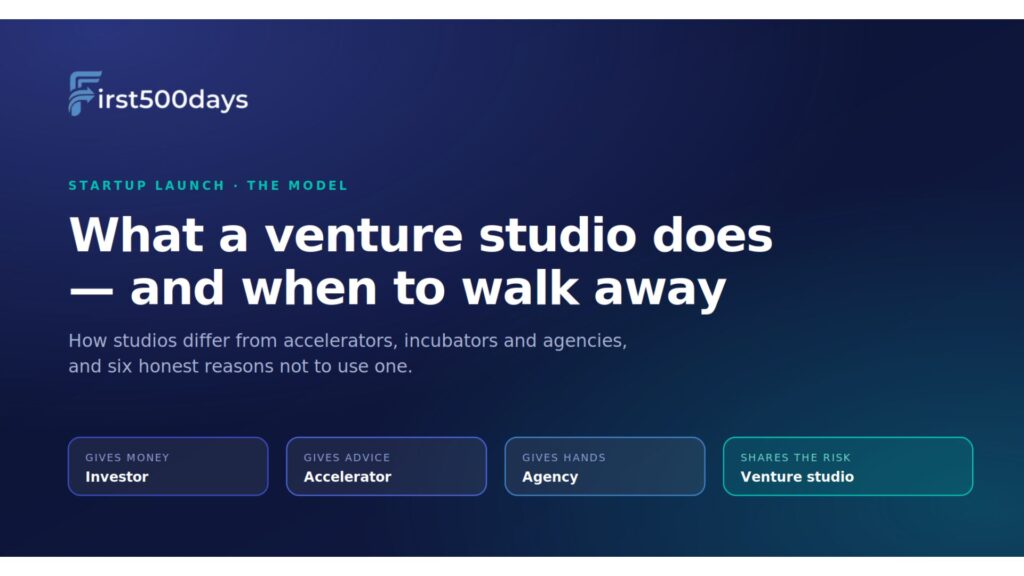
“Venture studio” has been applied to accelerators, agencies and consultancies with a rebrand. Here is what the model actually is, how it differs from the three things it gets confused with, and six honest reasons not to use one — written by a firm that operates as one. A venture studio builds companies alongside founders […]
Bootstrapping vs Raising: A Decision Framework, Not an Ideology
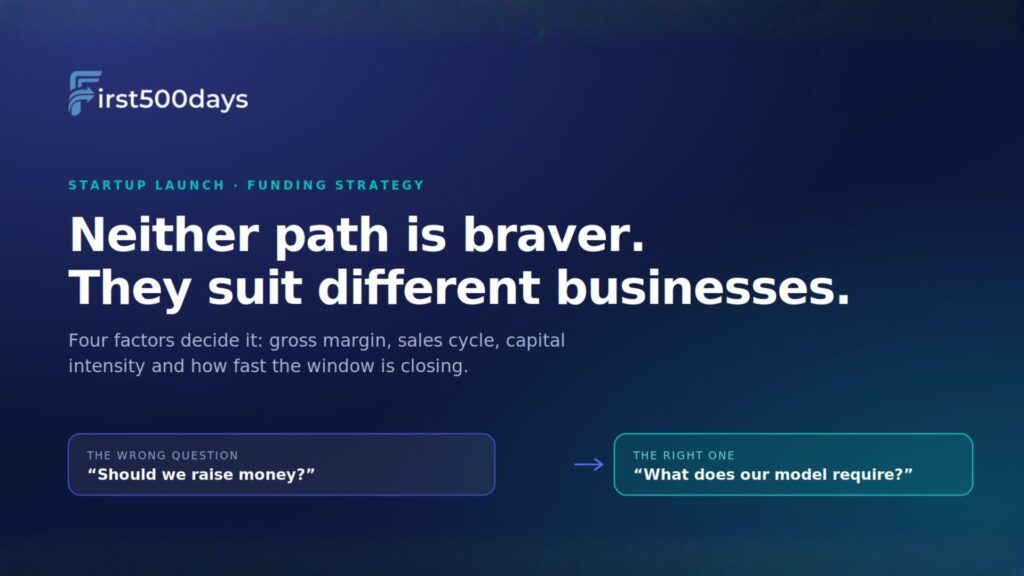
Both camps argue as though one answer were universally braver. It is a structural question, not a moral one — and four features of your business model decide it, mostly before your preferences get a vote. Bootstrap when gross margin is high, the sales cycle is short, little capital is required before revenue, and no […]
Investor-Ready in 8 Weeks: Deck, Data Room and Narrative
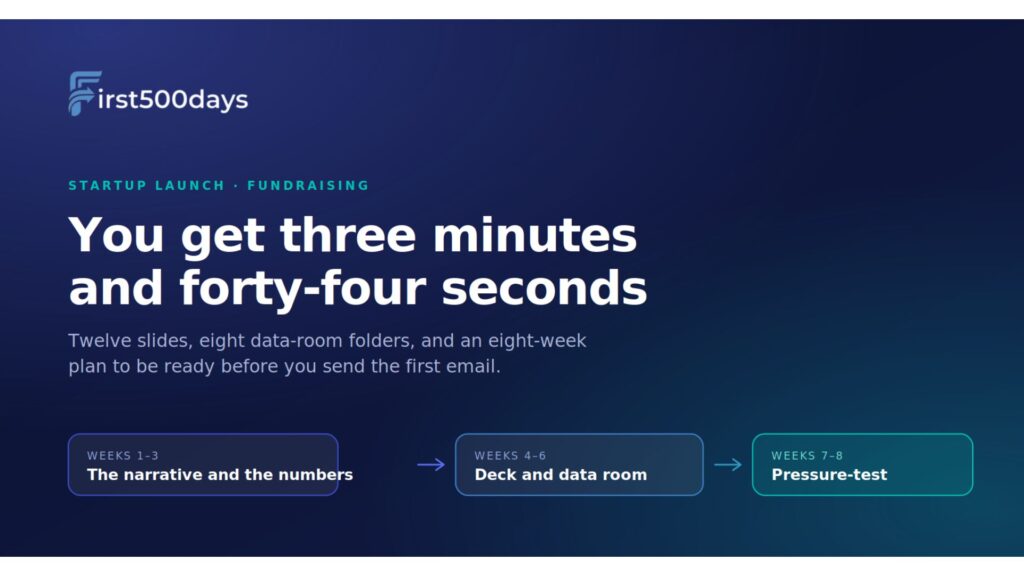
Fundraising fails on preparation more often than on merit. The deck gets under four minutes of attention, the data room gets weeks of scrutiny, and the narrative is what has to survive both. Eight weeks is enough to build all three — before you send the first email. Being investor-ready means three things exist and […]
When to Make Your First Five Hires — and In What Order
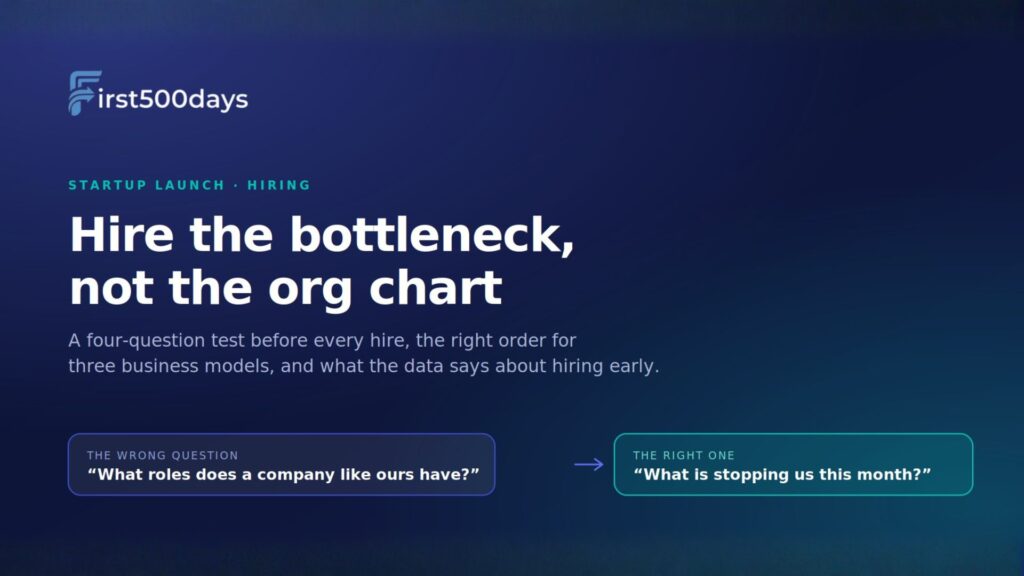
There is no standard first five. There is a constraint, and the right hire is whoever removes it. Hiring against an imagined org chart instead is the single most reliably fatal mistake in early scaling — and there is data on exactly how fatal. Hire when four things are true: the role is genuinely the […]
From Founder-Led Sales to a Repeatable Sales Motion
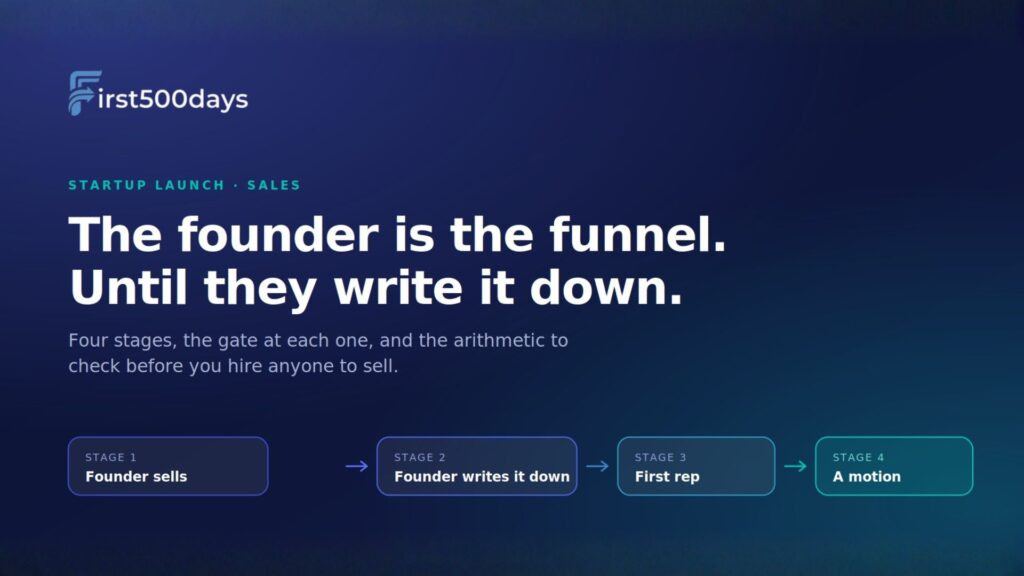
Founder-led selling works right up until the founder becomes the constraint. The transition out of it is not a hiring decision — it is a documentation problem, and hiring before you have solved it is how companies lose a year and a salary. Moving from founder-led sales to a repeatable motion happens in four stages, […]
Product-Market Fit Isn’t a Feeling — Here’s How to Measure It

“You’ll know it when you have it” is the most repeated and least useful advice in early-stage building. You will not know. You will hope. Here are the numbers that settle it, with actual thresholds. Product–market fit is measurable through five signals: whether your retention curve flattens, what share of active users would be “very […]